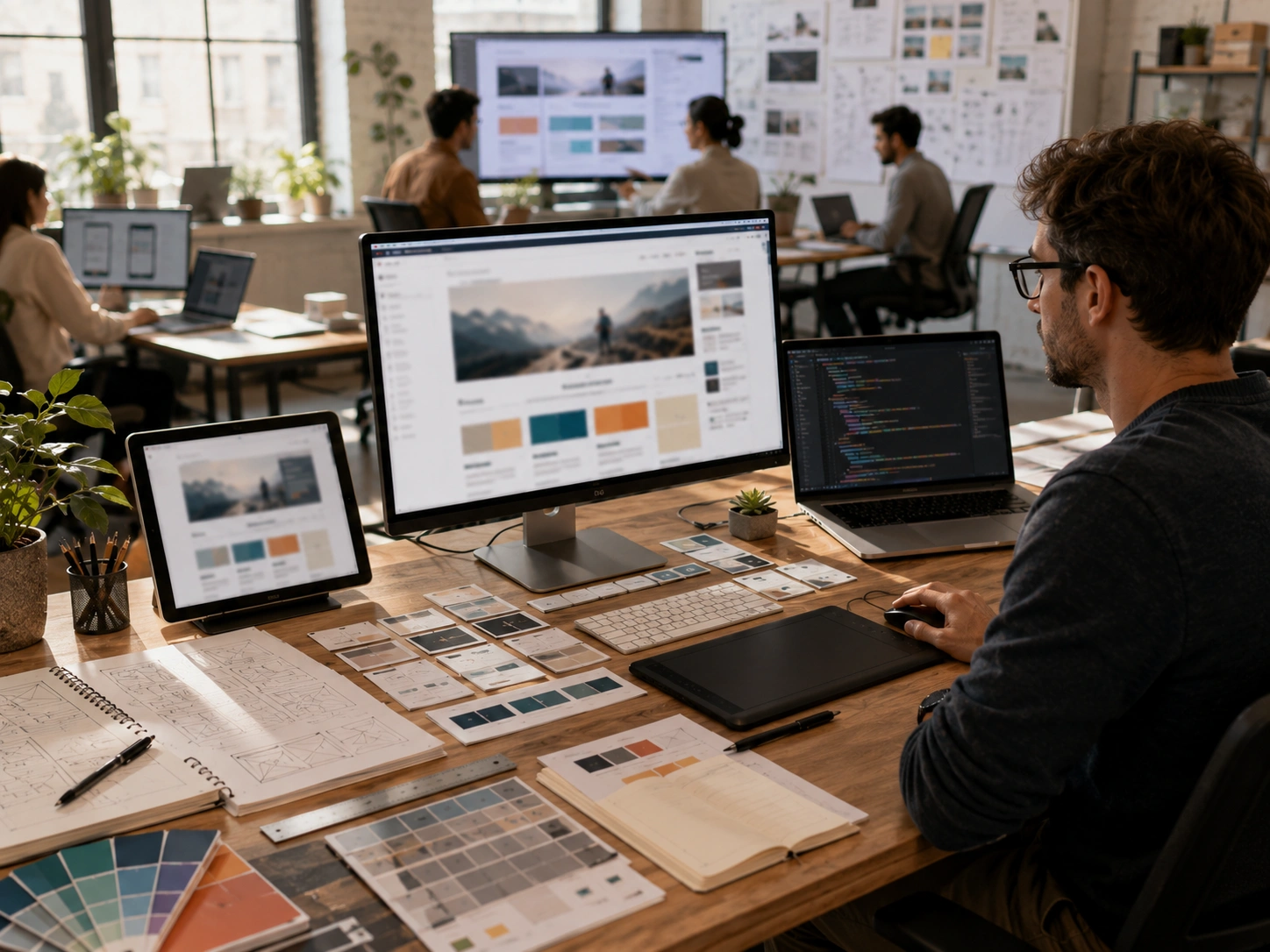
Most small business owners build their first website to get online fast. That approach works well when you’re just getting started. But that same site often becomes a bottleneck within two years.
As your business grows, your digital shopfront needs to evolve alongside it. A website that worked well at launch may struggle to support additional services, higher traffic, or expanding content. As those demands increase, performance and usability often begin to suffer.
In this article, we’ll cover why business websites get outgrown, what the warning signs look like, and what to do next. Keep reading to find out what’s holding your website back.
Why Your First Website No Longer Fits
Many small business owners build their first website on a free template over a weekend. It’s the right decision at that stage because getting online quickly is the priority.
Once the business gains momentum, a few areas deserve a closer look:
When a Simple Business Website Stops Keeping Up
A basic business website works well early on. But as your services expand, that same site struggles to keep up because the site no longer has the flexibility to support expansion.
Over time, the limitations become more obvious. Slow load times push visitors away, while outdated layouts make the business look like it hasn’t moved forward.
A clear layout and responsive pages make it easier for visitors to explore your services and take the next step. They also keep visitors on your site long enough to enquire.
Getting Your Domain and Business Name Right
A custom domain separates a real business from a hobby site. Free domain options like “yourbusiness.wixsite.com” chip away at credibility fast. That poor first impression can stop potential customers before they explore your services.
The problem gets worse when your domain name doesn’t match your business name. Visitors can become confused, and that mismatch erodes trust as soon as they arrive.
That’s why choosing the right domain name early sets a strong base for every website upgrade that follows. So, get it right, and you won’t have to fix it later.
Why Mobile Experience Is Now Non-Negotiable
Most first websites are built on desktop and never properly tested on mobile. That single oversight can frustrate visitors, reduce enquiries, and send potential customers to a competitor.
With more than half of all web traffic now coming from mobile devices, businesses can no longer afford to overlook mobile responsiveness. Google also prioritises mobile experience in its search rankings, so mobile performance affects both how easily people find your business and what they do after they arrive.
One of the clearest signs something’s wrong is a high bounce rate. If visitors leave within seconds on mobile, your site isn’t ready for them. That’s why mobile responsiveness deserves attention early in the design process.
What Changes When Your Business Grows
After working with small businesses across Australia, we’ve seen the same pattern repeat itself. The website that launched the business is rarely the one that grows it. At some point, the gap between what your site does and what your business needs becomes too wide to bridge.
Take a quick look at how the limitations become more obvious as your business increases:
Contact Forms, Content, and the Limits of Built-In Features
Basic built-in contact forms work fine when enquiries are slow. But as lead generation picks up, those same forms can’t capture the detailed information your team needs. The missing information slows follow-up and creates extra work for your team.
For the most part, service pages, product pages, and contact details all need room to expand. A site that relies on built-in tools alone is unable to give you that flexibility. We’ve seen business owners manually editing the same page six times in one week just to keep up.
For online stores that sell products, the gap gets even wider. An e-commerce platform needs proper product descriptions, editing tools, and structure. Most basic site builders simply don’t offer these.
Why Your First Website Builder Isn’t Enough
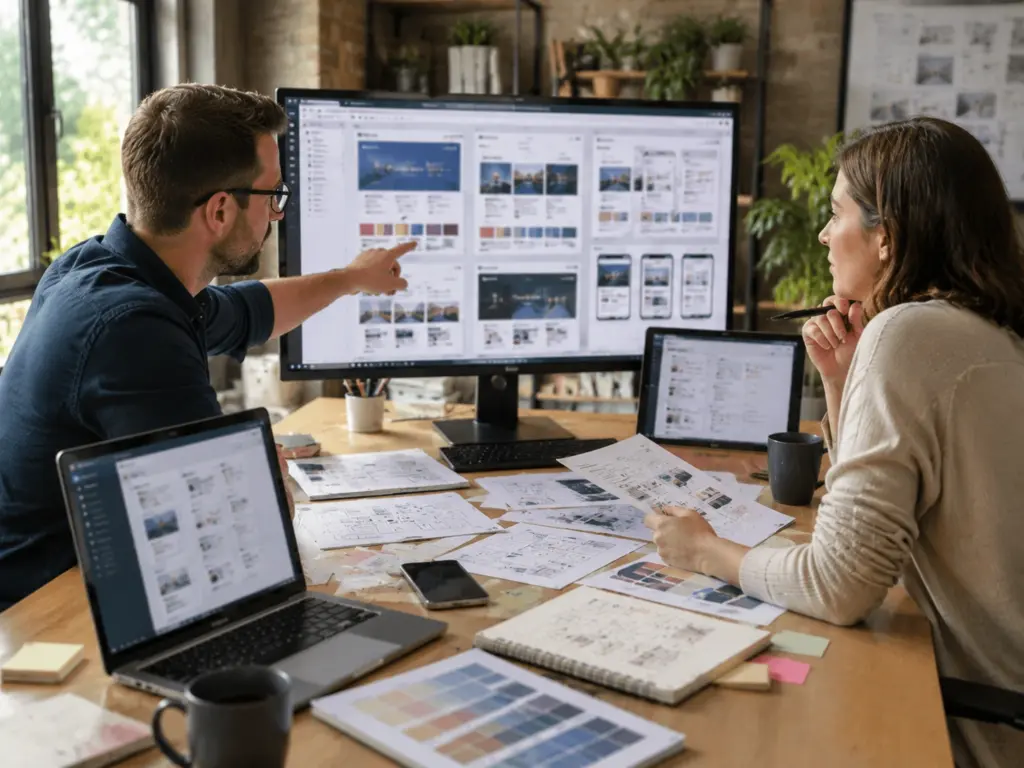
Entry-level website builders are built for speed rather than scale. A drag-and-drop editor and a handful of website templates get you started fast. That’s genuinely useful in the beginning.
In reality, a drag-and-drop editor only gets you so far before it runs out of tricks. As your business needs grow, customisation options run out, and technical skills become a barrier. This shows the best website builder for a startup isn’t always the right fit two years later.
Even so, switching feels daunting, but staying on the wrong site costs more in lost opportunities than a migration ever would. You need to understand that built-in marketing tools, email marketing integrations, and social media connections all count when you’re growing.
Website Redesign: What It Means and When You Need One
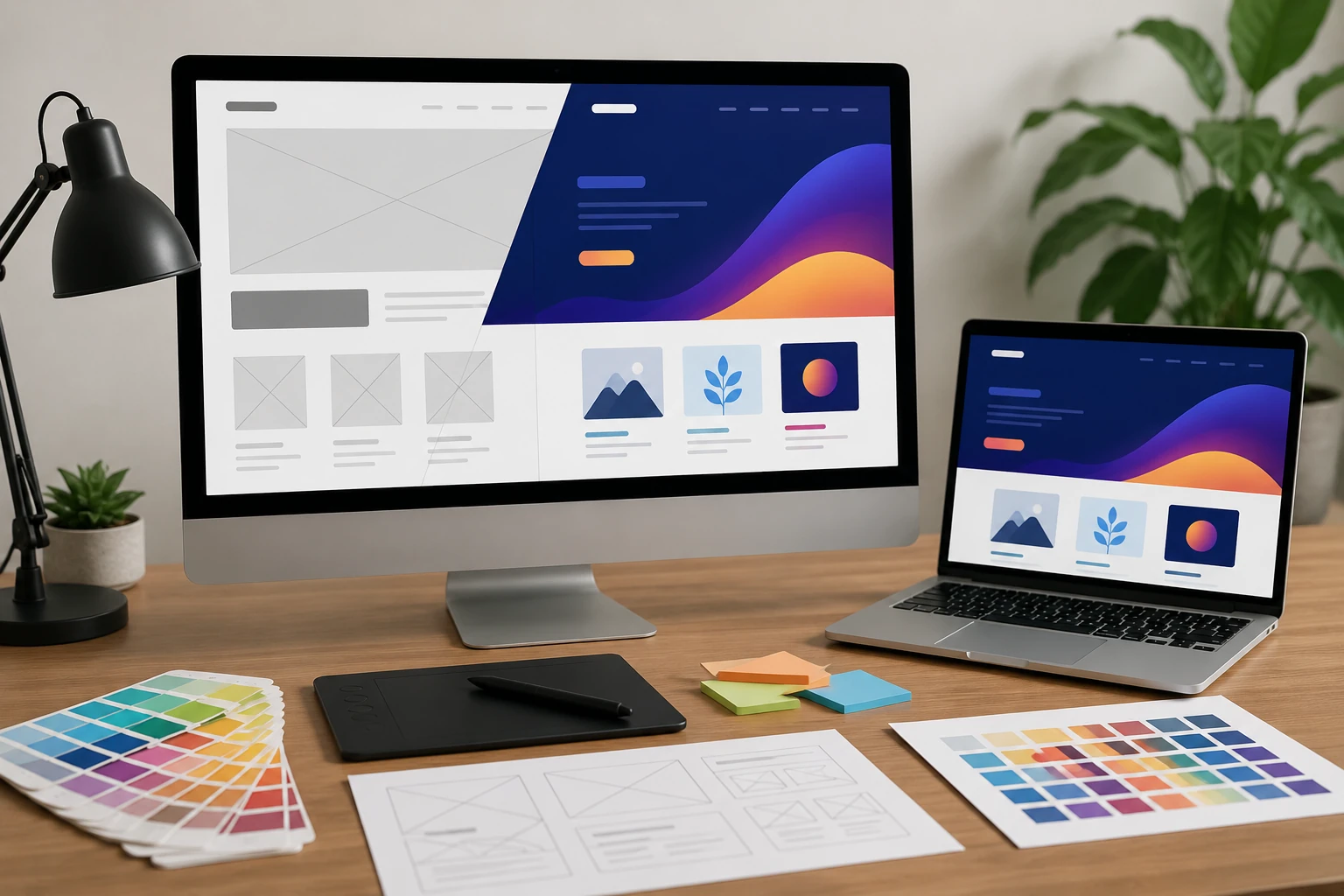
Most business owners don’t realise their site needs a redesign until it’s already costing them customers. That’s where a website redesign helps by improving your site’s structure, flow, and alignment with your business goals.
These signs usually indicate it’s time to upgrade your business website:
- Outdated Design and Slow Load Times: Visitors form an opinion within seconds of landing on your site. A professional-looking site with fast-loading pages keeps them there, but an old one sends them straight to a competitor.
- Poor Mobile Responsiveness: Most of the searches now happen on mobile devices. If your site breaks on a phone, it’s already hurting your organic traffic and Google search rankings.
- Missing Contact Details and Service Pages: A good website gives visitors exactly what they need to take the next step. Lead generation often stalls when visitors can’t find clear contact details or well-organised service pages.
- No Cyber Security Measures: Cyber attacks frequently target small business websites. Basic security measures, including two-factor authentication, provide an extra layer of protection for your website and your customers’ data.
And look, there’s no shame in admitting your site has aged. Every good business eventually needs a refresh. A professional website built with a proper design process gives you a digital shopfront that reflects where your business is today.
Now that you know what a redesign actually involves, it’s worth looking at how today’s tools make that process a lot less painful.
AI-Powered Tools and What They Mean for Your Next Website
The best part about today’s AI-powered tools is that a professional-looking website upgrade is now well within reach. Nowadays, you don’t need great technical skills or a huge budget.
Here’s where it gets interesting for small business owners who thought professional web design was beyond their budget:
How AI Tools Are Changing Business Website Design

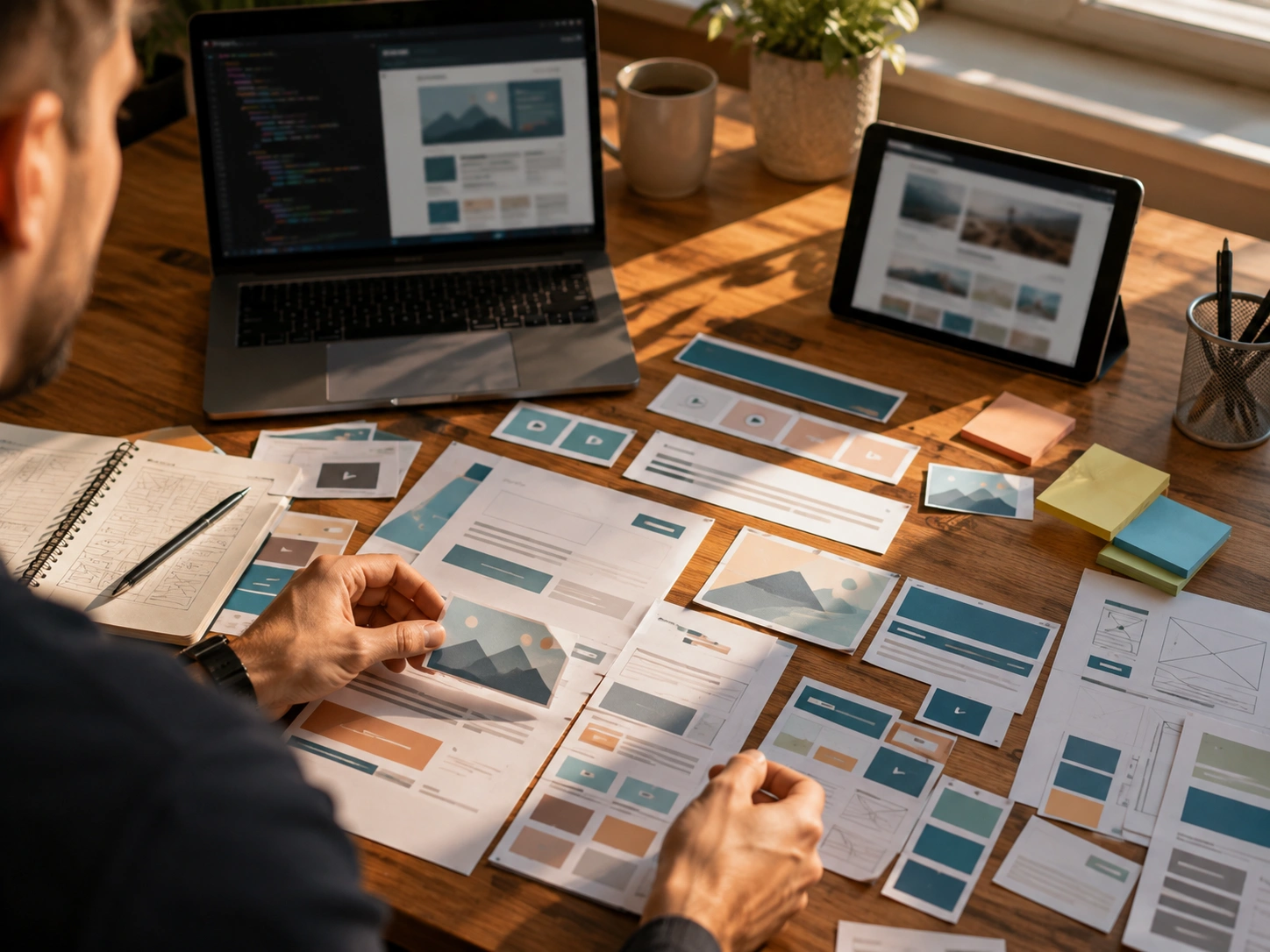
AI tools now handle layout suggestions, colour schemes, and design choices that once needed a web designer. Small businesses can get a personalised website up faster and at a fraction of the old cost.
Based on what we’ve seen firsthand, small businesses that pair AI tools with professional guidance end up with impressive results. As a result, the gap between DIY and professional web design is closing fast.
The benefits don’t stop there. A single dashboard can now manage your website content, social media posts, and marketing materials all in one place. That’s the kind of efficiency a growing business needs.
What a Content Management System Does and Why Your Next Site Needs One
A content management system (CMS) lets you update your website without touching a single line of code. For small business owners, it removes the need to rely on someone else for every small change. You aren’t waiting on a web designer every time a service page needs updating.
Most starter websites skip a proper CMS entirely. That means every small change needs a workaround, and your team spends more time organising website content. Without a proper CMS, SEO tools and analytics features often remain out of reach as well.
By contrast, a CMS-backed site makes creating content and tracking your site’s performance through Google Analytics something you can manage yourself. That’s how small businesses start making smarter decisions online.
Ready to Build Something That Grows With You?
Your website has a natural lifespan. As your business grows, it’s normal to reach a point where your first website no longer meets your needs.
And here’s the thing: growth often exposes the limits of a first website. Slow load times, outdated service pages, and an outdated online presence are all signs your website is falling behind. An upgrade helps bring it back in line with your business.
At Class Room Encounters, we work with small businesses across Australia to build websites that grow with them. A professional web design doesn’t have to be complicated or expensive. Get in touch today and let’s talk about what your next site should look like.