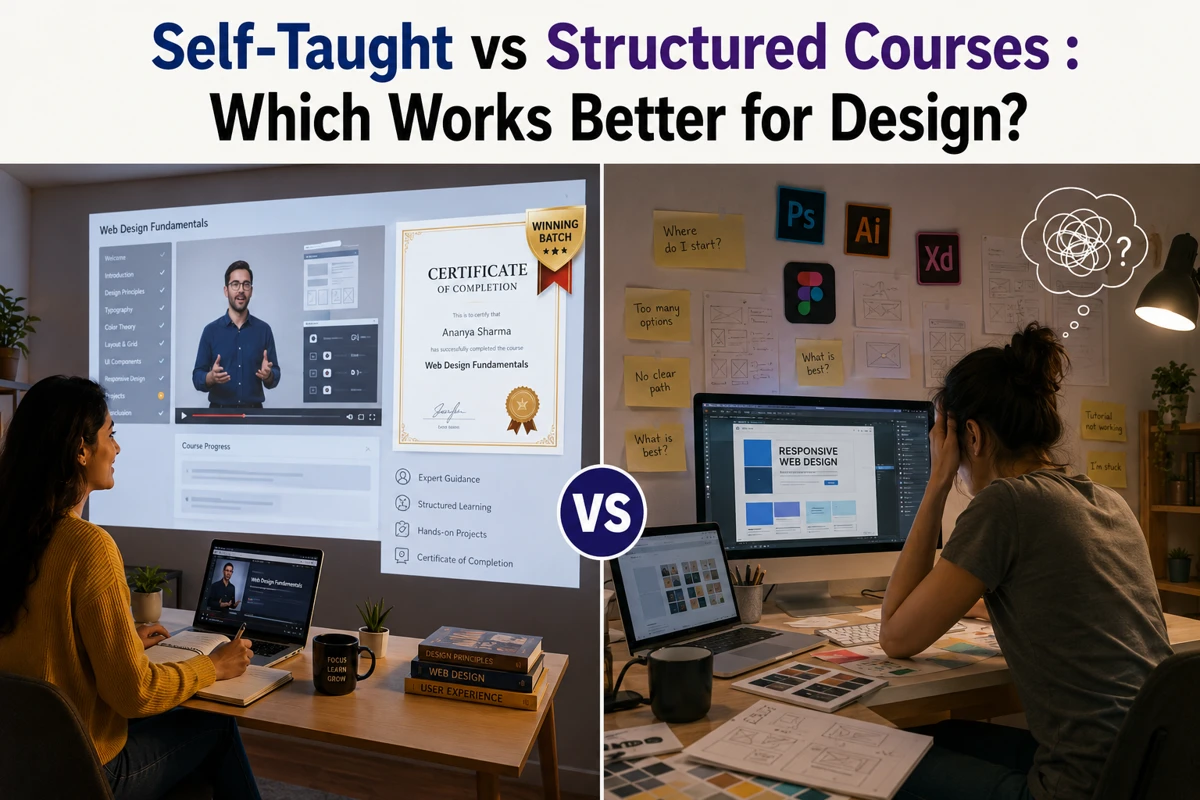
Every aspiring designer hits the same crossroads early on. Do you teach yourself web design through tutorials and personal projects, or enroll in a structured course and follow a set path? It’s one of those questions that doesn’t have a clean, universal answer.
The truth is, both routes produce talented, working designers. And what separates them is how well the learning style matches the person behind it.
This article breaks down both paths honestly. By the end, you’ll have a clearer picture of which approach fits your goals, your budget, and the way you actually learn.
What Does Self-Taught Web Design Actually Look Like?
For most people, self-taught web design starts with a YouTube video and a free Figma account.
You pick up cascading style sheets through trial and error and build personal projects without really knowing what you’re doing. And honestly, that’s completely fine. Experimenting with design tools at your own pace is how many careers genuinely begin.
The Real Strengths of Learning Design on Your Own
Many successful designers built their entire foundation through self-taught web design. The flexibility is real. You choose what to study, when to study it, and which design ideas to chase first.
Personal projects sharpen your design skills at your own pace, and you’re not locked into a curriculum that may already be six months out of date. What’s better, as a self-taught designer, you’re often learning the tools the industry is actually using right now.
Where Self-Teaching Can Let You Down
Going self-taught has real drawbacks that are easy to overlook when you’re caught up in building something new. Without guidance, it’s surprisingly easy to skip over core design principles entirely (this happens more often than you’d think).

Things like colour theory, visual hierarchy, typography rules, and layout spacing aren’t exciting to study, but they’re what separates polished work from amateur-looking work. Cutting corners on fundamentals might feel fine early on.
Over time, those gaps tend to show up later, usually at the worst possible moment.
Online Design Courses vs Self-Learning: A Side-by-Side Look
You might be thinking both paths look pretty similar on paper, but they’re not. Here’s how web design courses and self-directed graphic design learning actually stack up.
|
Factor |
Self-Taught | Structured Course |
|
Cost |
Low to free | Medium to high |
|
Flexibility |
High | Low to medium |
|
Structure |
Self-directed | Guided curriculum |
|
Feedback |
Limited | Mentors and peers |
|
Credentials |
Portfolio-based | Certificate or degree |
|
Job-readiness |
Varies | More consistent |
Neither option is a clear winner across every category. The bang for your buck really depends on where you are in your journey and what you need most right now.
Mapping Out a Graphic Design Learning Path That Actually Works
Whether you’re starting from scratch or filling in the gaps, every solid visual communication journey follows roughly the same three stages.
Let’s break down what each stage looks like in practice.
Foundations, Tools, and Getting Your Hands Dirty
Start with beginner-friendly design tools like Figma and Adobe Creative Suite, get comfortable with colour theory basics, and don’t overthink it (sounds tedious, we know). Foundations are unglamorous, but they hold everything else up.
Building a Portfolio Before You Feel Fully Ready
This is where most people go wrong. They wait until their design skills feel polished enough to show anyone. That usually slows down their growth because feedback is where real improvement happens.
So share your work early, gather real feedback, and treat every piece as progress rather than a finished product.
Knowing When to Invest in Web Design Training Options
Stalled growth, zero feedback, and rejected job applications are your signals. That’s when structured web design training is worth every cent.
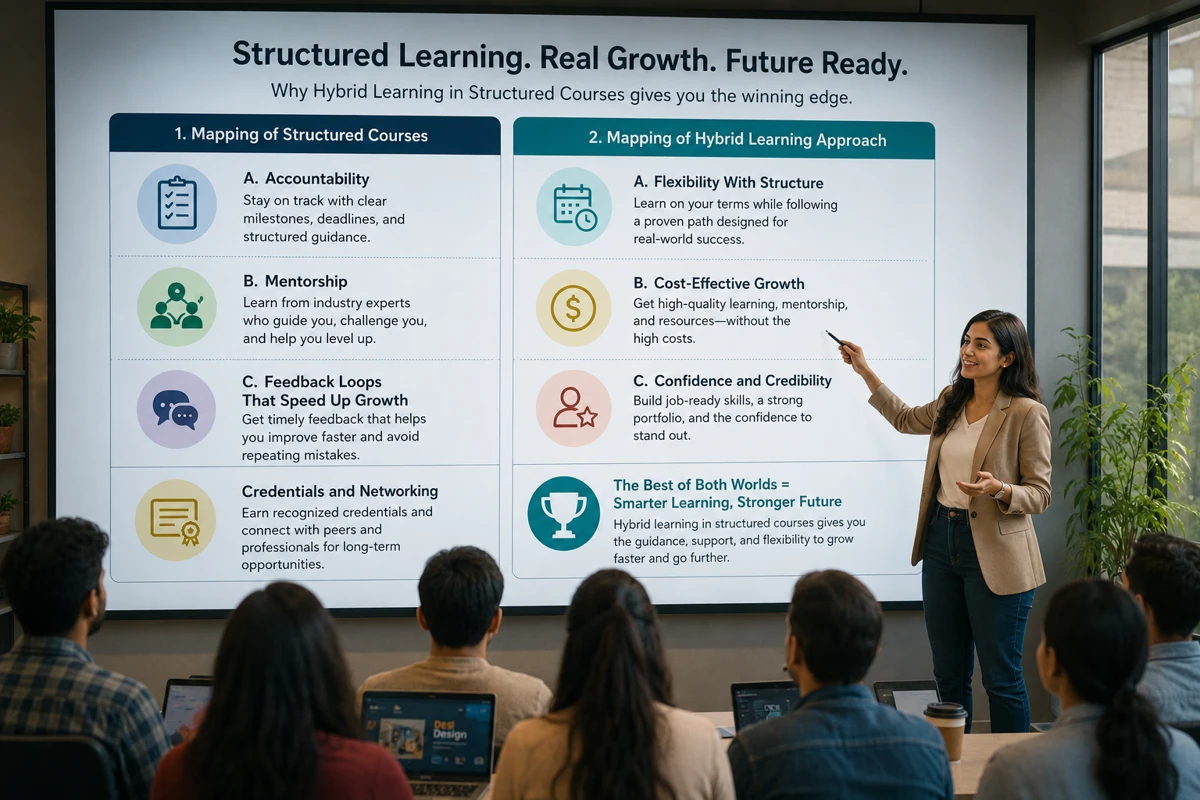
What Structured Courses Bring to the Table
Structured learning has a reputation for being rigid and overpriced. That’s fair in some cases. But web design courses aren’t just for beginners, and the rewards go well beyond a certificate at the end.
Accountability: The Thing Self-Learners Often Underestimate
Deadlines, peer cohorts, and structured critique push you further than solo study usually does when accountability goes missing for too long (and the damage adds up fast).
Mentorship and Feedback Loops That Speed Up Growth
Strong UI UX and user research skills rarely develop in isolation. A mentor catches the blind spots you didn’t even know you had, and that kind of feedback is hard to replicate on your own.

Credentials and Networking: Do They Still Matter?
In the design industry, a graphic design course certificate won’t open every door on its own. But the network you build inside a structured programme very often will.
After all, many cohort peers can become collaborators, referrers, and sometimes even employers down the track. That kind of professional circle is genuinely hard to build when you’re learning solo at home.
Can You Combine Both? The Hybrid Learning Approach
Most working designers don’t sit neatly in either camp. From what we’ve seen across dozens of digital design projects, the self-taught designer who supplements their skills with targeted online courses tends to progress the fastest.
You build creative confidence through self-directed web development work, then fill the gaps with structured learning when you actually need it. Makes sense, right?
Here’s what hybrid learning delivers in practice:
- Flexibility With Structure: You keep the freedom of self-directed study while still having a curriculum to fall back on when things get murky. No rigid schedules, just guided support when you actually need it.
- Cost-Effective Growth: A full degree isn’t always necessary. Short online courses targeted at specific skill gaps give you real value without the hefty price tag.
- Confidence and Credibility: Employers respond well to a strong portfolio backed by a certificate or two. Personal projects show initiative, and structured credentials show you can follow through.
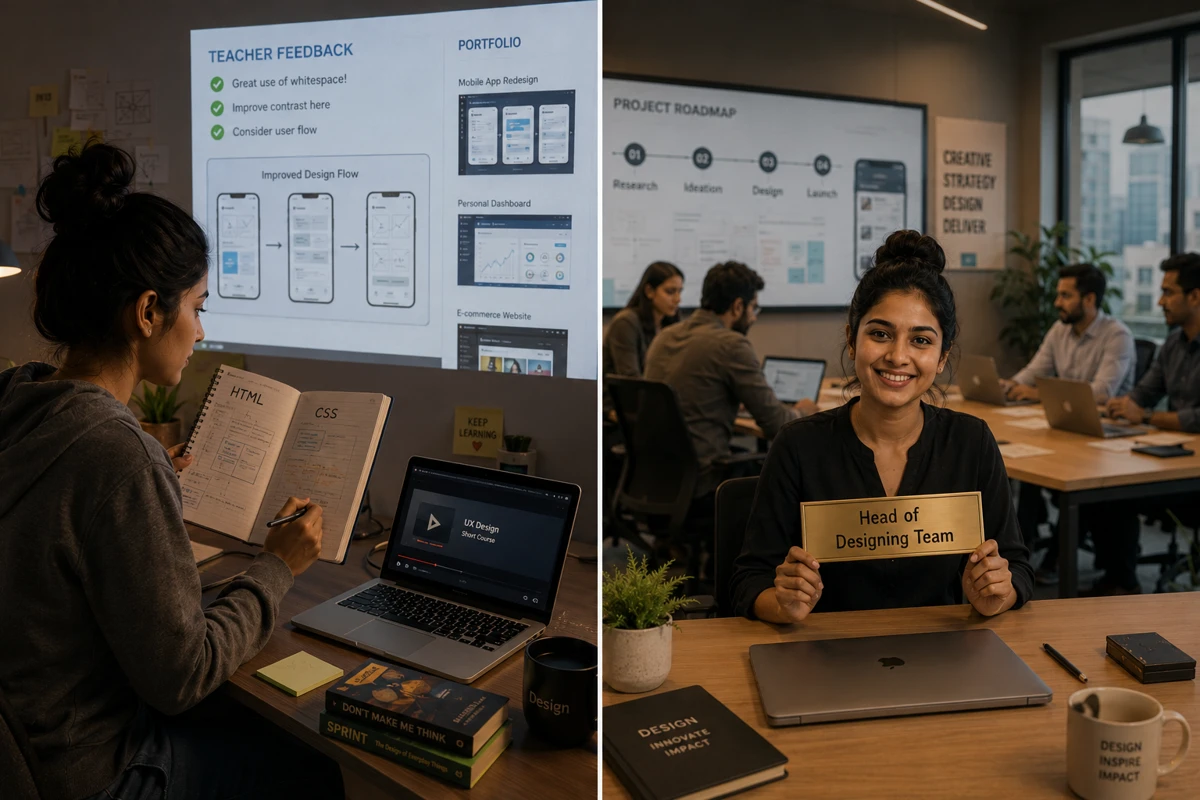
Take Mia, a Graphic designer in Melbourne. She taught herself HTML and CSS through free tutorials, but struggled with UX principles. By enrolling in a short online UX course, she not only improved her design flow but also landed a role at a digital agency. Her story shows how hybrid learning can turn raw curiosity into career‑ready skills.
Studying award-winning websites on Awwwards or browsing community layouts on Dribbble and Behance helps you find design inspiration. In fact, thousands of websites are submitted to Awwwards, giving designers a constantly refreshed pool of fresh ideas to explore.
Which Web Design Training Path Suits You Best?
Put simply, there’s no one‑size‑fits‑all path. We’ve seen designers prosper both self‑taught and through structured courses. Budget‑savvy learners often start solo, then add a targeted course when needed.
Meanwhile, career‑changers or those craving accountability usually gain more traction with structured training from the outset. Career changers and individuals who struggle with self-accountability can benefit more by starting with structured web design training.
Your Design Journey Starts With One Decision
Neither path is wrong. Self-taught designers and course graduates both find their success in this industry, and the best web designer you can become is the one who keeps learning, regardless of how they started.
The path that works is the one you’ll actually stick with. So pick the approach that fits your life right now, build consistently, and don’t wait until everything feels perfect before you start.
At Classroom Encounters, we work with businesses and designers at every stage of their digital journey. Whether you need a stronger web presence or want to level up your digital strategy, we’re here to help you move forward.
Visit classroomencounters.org today and start shaping your design future.