Design challenges help students develop creative thinking. They walk a class through empathising, defining problems, generating ideas and testing solutions. Each stage hands a class something concrete to do at the exact moment a blank page would normally stop them.
Most teachers already know their students can think creatively. Few classrooms give that thinking the structure design thinking provides. At Classroom Encounters, we see the same gap every term in schools across Perth and the Hunter.
This guide covers the five stages, a worked student project and the lesson plan for your first challenge. Let’s get into it.
The Stages of Design Thinking Build Creative Thinking Step by Step
Creative thinking rarely appears on demand, yet a clear design thinking approach draws it out of almost every student. Stanford University designers coined the term, using human-centred innovation to crack problems that ordinary planning could not solve.
Teachers often shorten the model to empathise, define, ideate, prototype and test. Most Design Thinking Frameworks follow that same order.
Walk through the first three Design Thinking phases below and you’ll see where the creative work sits:
Empathise and Define the Problem With Real Users
Students start by interviewing the people who’ll use whatever they build, and that user research narrows a vague topic down to one specific problem.
Each team then writes a one-sentence problem statement that names the user and their need (a 12-word limit works better than a loose one).
That sentence guides the whole project, because every later idea gets tested against the user’s needs rather than a marking rubric.
Ideate: Where Wild Ideas Are Welcome
Once the problem is locked in, students list as many solutions as they can without judging them. This is where quiet kids often surprise you.
We cap ideation at eight minutes and ask for twenty ideas. A tight limit stops students polishing their first safe answer.
Silly ideas earn their place too, since a hovering lunch tray usually hides a workable thought about queue length (a Year 7 class handed us that one last term).
Prototype and Test to Build Design Thinking Skills
Next, students build a rough prototype from cardboard, tape or a slide deck. A model they can hold gets sharper feedback.
Testing follows straight away. Classmates use the thing in front of them and report where it fails, not whether they liked it.
This loop runs two or three times. Students learn the basics of user experience by watching someone struggle with their design.
What Do the Five Stages Look Like in Student Projects?

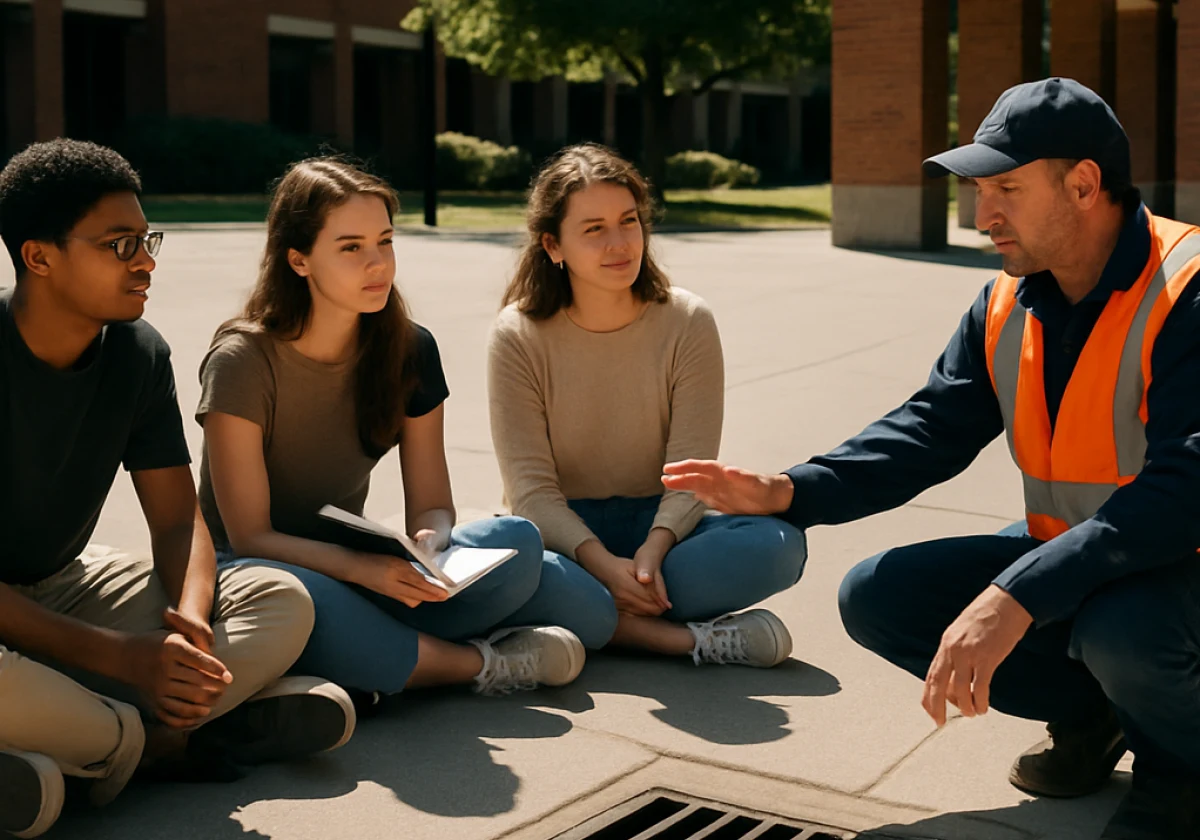
The five stages help students understand a problem, develop ideas and test a working solution. Each one builds a different creative skill. Teachers ask what that looks like in real student projects, so the table below tracks one stormwater litter challenge.
Each stage gives students a different way to think and solve problems. Have a look at the tasks that help build their creative skills:
| Stage | What students do | Creative skill it builds |
|---|---|---|
| Empathise | Interview the groundskeeper about blocked drains | Listening without judging |
| Define | Write one sentence naming the user | Narrowing a wide topic |
| Ideate | List 20 ideas in eight minutes | Thinking without a filter |
| Prototype | Build a trap from a milk crate and mesh | Making an idea visible |
| Test | Place it in the drain and measure the catch | Reading feedback honestly |
The creative task changes at each stage. A student who struggles to suggest ideas might do well when it’s time to build. That variety gives students with different strengths a chance to contribute. Shorter Design Thinking Activities can also help students practise these skills in a single lesson.
Connecting Design Challenges to Innovation and Creative Learning

Students who treat setbacks as feedback carry that habit into every subject, and that’s where innovation starts. The same problem-solving loop sits behind product design in business, where teams test with users before launch. Employers have noticed, and creative thinking now ranks second on the Future of Jobs list of core skills.
Design thinking builds habits that students can use beyond a single project. Here are four ways those skills carry into everyday learning:
- Learning From Failure: A broken model gives students useful information about what went wrong. They learn to report mistakes early and use feedback to improve their next attempt.
- Stronger Teamwork: Through interviews, sketches and building tasks, students share responsibilities. Each student takes ownership of one part of the solution and learns to work with others.
- Higher Standards: When younger students become the audience, the project gains a clear purpose. Students put more effort into their work because someone else will use their solution.
- Skills Across Subjects: The same problem-solving steps also work in essays and science reports. Students learn to test ideas, review results and improve their work across different subjects.
These habits become easier to practise when teachers name them during each lesson. For example, praising a student for learning from a failed test helps the whole class see mistakes differently.
Over time, students become more comfortable sharing ideas, working together and improving their solutions. Regular practice also helps them develop Design Thinking Mindsets that support creative learning beyond the classroom.
Running Your First Design Challenge: A Design Thinking Workshop Plan
Now that the stages are clear, teaching design thinking needs only a problem your students can see and a few lessons. Pick something visible from the classroom window, like bin overflow, bus queue chaos or a corridor nobody can hear in. Narrow scope beats ambition on a first run, because a problem with named users gives students somewhere to point when they stall.
From there, set the timetable before the excitement takes over. Four lessons cover it: one for interviews, one for ideation, one for building and one for testing. Keep homework to collecting photos.
In practice, the prototype lesson is where most teachers worry about materials. Our Design Thinking workshops run on cardboard, masking tape and recycled packaging from the staffroom. Those limits sharpen student thinking rather than blunting it (a hot glue gun stays optional on the first run).
A chatbot that hands over 20 ideas skips the thinking stage. After testing, ask each team what they’d change. Their answer shows you how far their creative thinking has moved.
Pro tip: keep AI out of ideation on the first run.
Give Your Students Their First Design Challenge
Design challenges give creative thinking a repeatable structure. Students who work through all five stages finish with a tested idea they can defend. Structure does the work that a pep talk about creativity never will.
Start with one problem your class already complains about, then book four lessons in next term’s planner. Your students will show you what they can build.
Classroom Encounters designs hands-on learning programs for primary and secondary classrooms across Australia. Contact us to book your first design challenge and watch your students surprise you.